Sacred Discernment at the Ballot Box: Navigating Electoral Politics Without Surrendering Prophetic Integrity

Photo: Friedrich Haag, CC BY-SA 4.0, via Wikimedia Commons
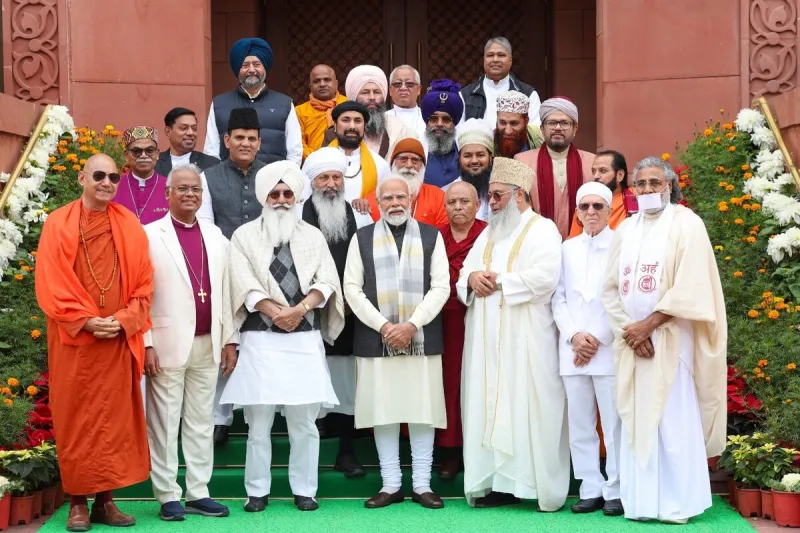
Every two years, millions of Americans from religious minority communities walk into voting booths carrying a burden that secular political science rarely acknowledges: the weight of moral obligation that does not map cleanly onto any party platform. For Muslim Americans, Jewish Americans, Sikh Americans, and members of other minority faith traditions, the act of voting is not merely a civic ritual. It is, in many traditions, an act of moral witness — a declaration about what kind of society one is willing to endorse.
The two-party system, by its very architecture, demands compression. It asks voters to bundle complex, sometimes contradictory values into a single lever pulled once every November. For communities whose ethical frameworks address economic justice, the sanctity of human life, the obligations of hospitality to the stranger, the rule of law, and the imperative of communal welfare all simultaneously, that compression is not merely inconvenient. It can feel like a form of spiritual coercion.
This is not a new problem. But it is an increasingly urgent one.
The Trap of Partisan Capture
Partisan capture occurs when a community becomes so reliably affiliated with one party that its members lose meaningful leverage over the policy agenda. The community's vote is taken for granted by its assumed ally and dismissed as unreachable by the opposition. The result is that the community's actual interests — distinct, complex, and rooted in its own moral tradition — become subordinate to the party's broader electoral calculus.
Religious minority communities in the United States have experienced this dynamic acutely. Arab American and Muslim American communities in the Midwest, for instance, spent decades building relationships with the Democratic Party on the basis of shared commitments to civil liberties, immigrant rights, and economic inclusion. Yet when those same communities raised urgent moral objections to foreign policy decisions, they frequently found their concerns deprioritized or openly dismissed. The lesson is not that partisan affiliation is inherently wrong. It is that affiliation without leverage is surrender.
Similarly, some Orthodox Jewish and evangelical Christian communities have built deep ties to the Republican Party on the basis of shared social values, only to find that economic policies advanced under that banner conflict sharply with traditional religious obligations regarding care for the poor and the vulnerable.
The question, then, is not which party deserves the community's loyalty. The question is how communities can engage electoral politics as moral agents rather than as captive constituencies.
Ethical Frameworks for Candidate Evaluation
Several religious minority communities have developed sophisticated internal frameworks for evaluating candidates and ballot measures that resist simple partisan sorting. These frameworks share certain structural features worth examining.
Hierarchical weighting of values. Rather than treating all policy positions as equally important, these frameworks establish a hierarchy of moral priorities rooted in scripture, legal tradition, or communal consensus. For many Islamic jurisprudential traditions, this hierarchy begins with the preservation of life, then the preservation of reason, then the preservation of lineage, community, and property. A candidate's positions are evaluated against this hierarchy, not against a party checklist.
Consequentialist accountability. Some communities, drawing on traditions of pragmatic ethics, evaluate candidates not only on stated positions but on demonstrated capacity to govern effectively. A candidate who professes alignment with communal values but has a record of institutional incompetence or corruption is judged more harshly than one whose positions are imperfect but whose governance record shows genuine public benefit.
Communal deliberation rather than individual choice. In many religious minority traditions, major decisions — including electoral ones — are understood as communal rather than purely individual acts. Congregational forums, community councils, and deliberative assemblies convene before elections to collectively reason through the moral trade-offs involved. This practice not only produces more informed voters; it builds the kind of relational infrastructure that sustains political power across election cycles.
Case Study: Muslim American Voters in Michigan, 2024
The 2024 presidential primary season offered a striking contemporary case study in prophetic independence. In Michigan, a state with one of the largest Arab American and Muslim American populations in the country, a significant bloc of voters organized under the "Uncommitted" banner during the Democratic primary. Their motivation was explicitly moral: deep objection to the Biden administration's posture on the conflict in Gaza, framed not merely as a foreign policy disagreement but as a matter of religious and ethical obligation.
The movement was remarkable not for its electoral outcome alone but for its methodology. Community members organized through mosques and Islamic centers, issued statements grounded in Islamic ethical principles, engaged local and national media on explicitly moral terms, and demonstrated that a religious minority community could exercise meaningful electoral leverage without abandoning its values or simply defecting to the opposing party. It was, in the fullest sense, an exercise of hakam — judgment — applied to the political sphere.
The episode drew criticism from some quarters and admiration from others. But its significance for this discussion lies in what it demonstrated: that religious minority communities can, when organized and morally grounded, act as genuine political agents rather than passive constituencies.
Practical Tools for Communities
For communities seeking to develop their own frameworks for electoral discernment, several practical tools have proven effective.
Candidate questionnaires rooted in communal values. Rather than relying on party platforms or media coverage, communities can develop their own questionnaires that ask candidates to address issues of specific moral and practical importance to the community. These questionnaires, developed through internal deliberation, force both the community and the candidates to engage on the community's own terms.
Voter education that teaches moral reasoning, not just civic procedure. Voter education programs in religious minority communities are most effective when they teach members how to reason morally about political choices, not merely how to register and where to vote. This means engaging seriously with the ethical tensions involved in electoral trade-offs.
Coalition-building across communities of conscience. Prophetic independence does not require isolation. Religious minority communities that share overlapping moral commitments — across different faith traditions — can build coalitions that amplify their collective leverage without requiring any single community to subordinate its identity to a broader partisan agenda.
Post-election accountability mechanisms. The relationship with elected officials does not end on election night. Communities that build formal mechanisms for holding elected officials accountable — through regular meetings, public scorecards, and organized responses to policy decisions — maintain leverage that purely electoral engagement cannot sustain.
Conclusion: Judgment as a Civic Virtue
The word hakam, in Arabic, carries connotations of wisdom, judgment, and governance. It describes not merely the act of deciding but the quality of discernment that makes a decision just. It is an apt frame for what religious minority communities are called to exercise in the electoral arena.
The voting booth need not be a place of moral compromise. With the right frameworks, the right communal infrastructure, and the right commitment to prophetic independence, it can be a site of genuine moral agency — a place where communities assert, with clarity and dignity, what kind of justice they are willing to stand for and what kind of governance they demand in return.