The Moral Cost of Silence: A Call for Religious Minorities to Engage Boldly in American Public Life
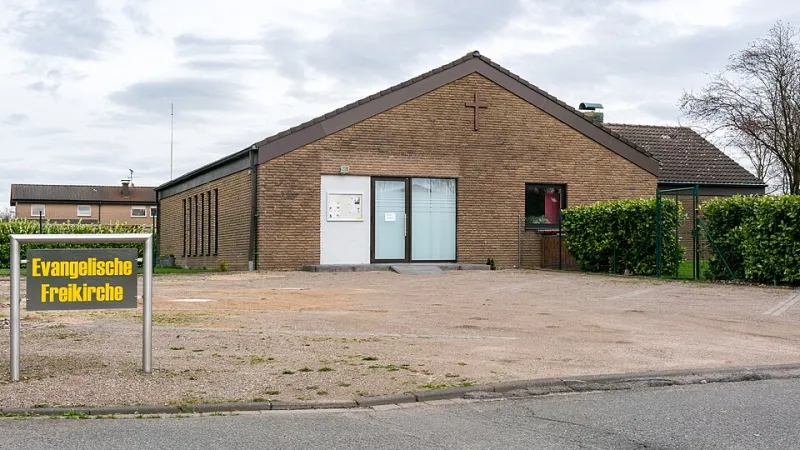
Photo: Dietmar Rabich, CC BY-SA 4.0, via Wikimedia Commons
There is a particular kind of silence that presents itself as holiness. It wears the language of spiritual discipline — of keeping one's eyes fixed on eternal matters rather than the transient noise of politics. It is practiced in many of our most devout communities. And in the current American moment, it is doing serious harm.
This is not an argument against spiritual depth. It is not a call to transform houses of worship into partisan campaign offices. It is something more uncomfortable than either of those things: a direct challenge to the assumption, widespread among religious minority communities in the United States, that civic disengagement is a form of faithfulness. It is not. In most of our traditions, it is closer to the opposite.
The Retreat and Its Reasons
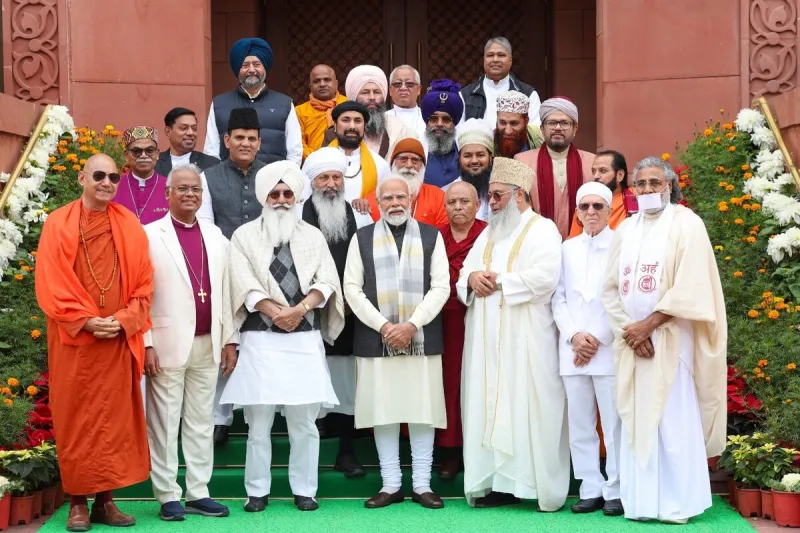
The reluctance of many religious minority communities to engage vocally in secular policy debates is not difficult to understand. For communities with histories of persecution, displacement, and marginalization — whether Muslim Americans navigating a post-9/11 political landscape, Jewish Americans confronting the normalization of antisemitism, Sikh Americans misidentified and targeted by violence, or Hindu Americans stereotyped in both political directions — the calculation of when and how to speak is never simple.
There is also the legitimate concern about institutional integrity. The Johnson Amendment, which restricts explicit partisan endorsement by tax-exempt religious organizations, is frequently misunderstood as a broader prohibition on political engagement — a misreading that has the practical effect of silencing communities who could lawfully speak on policy issues without jeopardizing their nonprofit status. Fear of legal complexity, combined with fear of social backlash, produces a default toward quietism that serves no one except those who benefit from these communities' continued absence from the table.
And there is, beneath all of this, a genuine theological anxiety: the fear that engaging the dirty machinery of politics will corrupt the moral clarity that gives religious witness its power. This anxiety deserves to be taken seriously. It is also, when it becomes an absolute posture rather than a disciplining concern, a way of avoiding responsibility.
The False Binary
The framing of "faith versus politics" is, at its core, a false choice — and it is a choice that has been deliberately constructed and maintained by interests that prefer religious minority communities to remain on the sidelines.
Every major American social transformation that we now celebrate as a moral achievement — the abolition of slavery, the civil rights movement, the labor rights struggles of the early twentieth century — was driven in substantial part by communities of faith who refused to accept that their deepest convictions had nothing to say about the structures of their society. Frederick Douglass was a lay preacher. The Southern Christian Leadership Conference organized from pulpits. César Chávez opened his marches with mass. The prophetic tradition in American public life is inseparable from religious conviction.
What distinguished these movements was not that they abandoned theological grounding in order to participate in civic life. It was that they brought that grounding with them — and it gave their advocacy a moral weight that purely secular arguments often could not match.
Religious minority communities in the United States today possess exactly that kind of moral capital. The question is whether they will spend it.
What Principled Engagement Actually Looks Like
Engaging in public life without compromising spiritual integrity requires frameworks, not just courage. Several principles have emerged from communities that have navigated this terrain most effectively.
Distinguish policy from partisanship. There is an enormous difference between advocating for a specific legislative outcome — expanded Medicaid access, anti-discrimination protections, criminal justice reform — and endorsing a political party or candidate. The former is not only legally permissible for religious organizations; it is arguably a moral obligation when the policy in question directly affects the welfare of the community. The latter carries genuine risks to institutional credibility and legal standing. Communities that conflate the two often end up doing neither well.
Root advocacy in your own tradition's specific language. One of the most powerful things a religious community can do in the public square is refuse to adopt the rhetorical frameworks handed to them by either political party and instead articulate their positions in the authentic vocabulary of their own tradition. When a Muslim organization opposes mass incarceration by invoking the Quranic imperative toward 'adl (justice) and ihsan (excellence in conduct), or when a Jewish congregation frames its immigration advocacy through the Torah's repeated command to protect the stranger, they are doing something that secular advocacy organizations cannot replicate. They are bringing an irreplaceable moral perspective to bear on a shared public problem.
Build coalitions across faith lines. Some of the most durable civic achievements of religious minority communities in recent years have come through interfaith organizing — coalitions that combine the specific moral authority of each tradition with the numerical and political strength of a broader alliance. These coalitions are also more resistant to the "divisive" framing that opponents often use to discredit single-community advocacy.
Prepare your community for the discomfort. Civic engagement, done honestly, will sometimes put a faith community at odds with powerful interests, with members of their own congregation, and with political figures who previously seemed like allies. Leaders who enter this space without preparing their communities for that discomfort will find that the first serious conflict sends everyone retreating back to quietism. The prophetic voice requires a community that has been cultivated to receive it.
The Stakes
The issues currently before American legislatures and courts — immigration enforcement, voting rights, healthcare access, housing policy, the treatment of religious minorities in public institutions — are not abstract. They are shaping the material conditions of life for the very people sitting in our congregations every week.
Silence in the face of policies that harm our communities is not neutrality. It is a choice. And like all choices, it carries moral weight.
The hakam — the wise one, the judge, the arbiter — in any tradition is not simply the person who knows the most. It is the person who acts on what they know, who brings knowledge into contact with the world as it actually is. Our communities are full of such people. The moment calls for them to speak.