Absent at the Table: The Structural Barriers Keeping Religious Minorities Out of Local Government — and What Communities Can Do Now
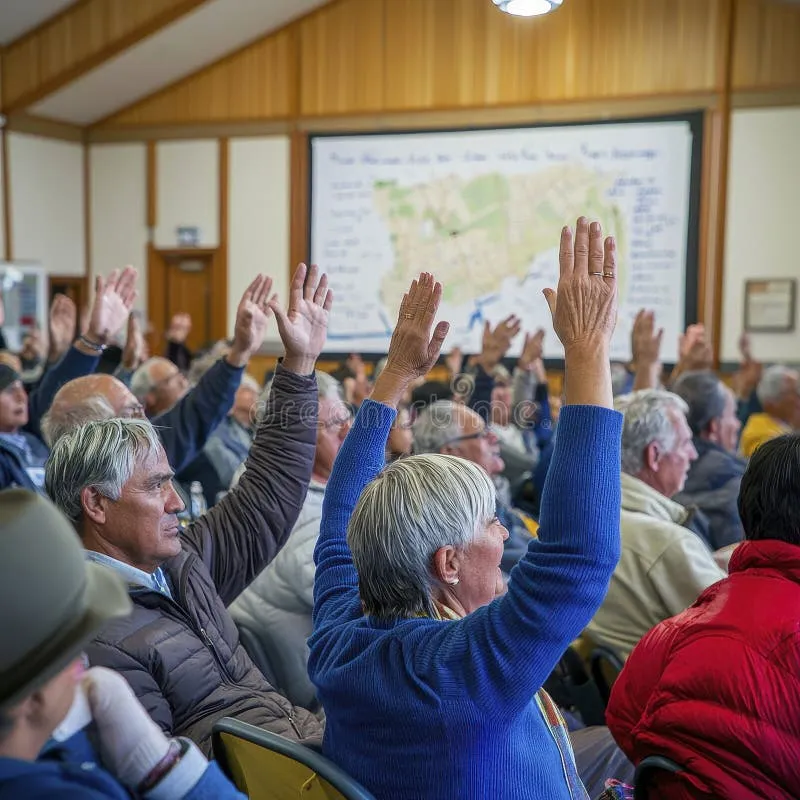
Photo: diverse community members local government city council meeting civic engagement, via thumbs.dreamstime.com
The Governance Closest to Home
A city council member decides where a new highway gets built — and which neighborhood bears the burden of the off-ramp. A county commissioner votes on zoning ordinances that determine whether a mosque, a temple, or a synagogue can be built in a residential area. A school board adopts a curriculum that either acknowledges or erases the contributions of diverse religious and cultural communities. These are not abstract policy questions. They are decisions that shape the texture of daily life for millions of Americans — and they are being made, overwhelmingly, without the meaningful participation of the religious minority communities most affected by them.
The numbers are stark. According to data compiled from municipal election records and candidate filings across twenty major metropolitan areas, religious minorities — defined broadly to include Jewish, Muslim, Hindu, Buddhist, Sikh, and other non-Christian communities — hold fewer than eight percent of elected seats at the city council and county commission levels, despite representing an estimated twenty-two percent of the national population. In suburban and exurban jurisdictions, where population growth driven by immigrant and second-generation communities has been most dramatic over the past two decades, the gap is often wider still.
Understanding the Barriers: More Than Mere Underrepresentation
It would be tempting to attribute this gap to a simple lack of interest or civic engagement — a narrative that is both inaccurate and, frankly, insulting to communities with long traditions of political participation. The reality is considerably more structural.
Financial thresholds and fundraising networks. Running for local office, even at the city council level, has become an increasingly expensive undertaking in most American jurisdictions. Filing fees, mailer campaigns, digital advertising, and the infrastructure of a credible campaign require capital that candidates must raise before a single vote is cast. Religious minority candidates, particularly those from immigrant or first-generation backgrounds, frequently lack access to the established donor networks and party infrastructure that ease this burden for candidates from majority communities. A candidate running for a suburban school board seat in a mid-sized American city can easily spend thirty to fifty thousand dollars on a competitive race — a figure that represents a significant barrier of entry for communities that have not yet built the philanthropic and political fundraising ecosystems that more established groups take for granted.
Party gatekeeping and recruitment pipelines. Both major political parties rely heavily on informal recruitment networks — local party chairs, elected officials, and civic organization leaders who identify and encourage promising candidates. These networks, built over decades, tend to reproduce their own demographic composition. A Muslim attorney or a Hindu small business owner with genuine civic leadership experience may simply never receive a phone call from a party recruiter, not because of explicit bias, but because they exist outside the social and professional circles where recruitment conversations happen. This structural invisibility is one of the most consequential and least discussed barriers to minority political representation.
Scheduling and cultural incompatibility. Local government operates on calendars that were designed around the rhythms of majority communities. City council meetings scheduled on Friday evenings present obvious obstacles for observant Jewish candidates and constituents. Campaign events held during Ramadan, Diwali, or Rosh Hashanah create conflicts that majority candidates never face. While individually manageable, these frictions accumulate into a pattern that signals, however unintentionally, that local government was not designed with minority communities in mind.
Targeted harassment and Islamophobia, antisemitism, and xenophobia. Data from the Anti-Defamation League, the Council on American-Islamic Relations, and similar civil rights organizations consistently documents elevated rates of harassment directed at minority candidates for public office. Jewish candidates have faced antisemitic messaging and social media campaigns. Muslim candidates have confronted organized disinformation efforts questioning their loyalty to the United States. Hindu candidates have been subjected to nativist rhetoric framing their candidacies as expressions of foreign influence. This climate of hostility imposes real costs — emotional, financial, and reputational — that deter qualified individuals from entering the arena.
What the Data Reveals About Where Representation Does Exist
The picture is not uniformly bleak. Examining jurisdictions where religious minority representation has improved offers instructive lessons about the conditions that enable progress.
In cities with robust community organizing infrastructure — places where immigrant advocacy organizations, religious institutions, and civic groups have worked deliberately to build political capacity — minority candidates have achieved meaningful electoral success. Dearborn, Michigan, with its large Arab American Muslim population, has elected Muslim candidates to city council and mayoral offices in part because decades of community institution-building created the social infrastructure to support those candidacies. Similarly, communities in New Jersey, California, and New York with concentrated South Asian populations have produced a growing cohort of Hindu and Sikh elected officials at the local level, driven by intentional recruitment efforts by organizations like SAALT (South Asian Americans Leading Together) and local Democratic club chapters.
The common thread is not demography alone — it is organized, sustained investment in political infrastructure.
A Practical Roadmap for Communities Ready to Act
For communities seeking to close the representation gap, the evidence points toward several high-impact strategies that can be implemented at the local level without waiting for national policy change.
Build candidate pipelines before you need candidates. The most effective organizations do not scramble to find candidates when an election approaches — they cultivate potential leaders years in advance. This means identifying civic-minded community members, encouraging their participation in appointed boards and commissions (which serve as natural stepping stones to elected office), and providing mentorship, civic education, and public speaking opportunities that build the competencies candidates need. Organizations like Emerge America and New American Leaders already provide structured training programs; religious minority communities should actively recruit their members into these pipelines.
Develop community-controlled fundraising infrastructure. Political action committees and donor networks organized within religious minority communities can dramatically lower the financial barriers facing candidates. When the Jewish Democratic Council of America, or Muslim political action committees in states like Michigan and Minnesota, build organized fundraising capacity, they create structural resources that individual candidates can draw upon rather than building from scratch. This infrastructure development is slow and unsexy — but it is foundational.
Demand calendar accommodation from party structures. Community organizations should formally request that local Democratic and Republican party committees adopt scheduling policies that avoid major religious holidays when planning candidate forums, primary debates, and party events. This is a low-cost accommodation with high symbolic and practical significance. Several county party organizations have already adopted such policies when asked directly — the key word being "asked."
Engage local media and reframe the narrative. Local newspapers, community radio stations, and neighborhood news websites shape how voters understand who is qualified to lead. Religious minority communities should invest in media relations, op-ed writing, and relationship-building with local journalists to ensure that minority candidates are covered with the same depth and seriousness as their majority counterparts.
Pursue structural reforms where possible. In jurisdictions where at-large council elections dilute minority community voting power, advocacy for district-based representation can be transformative. The shift from at-large to district elections has historically increased representation for racial and ethnic minority communities; similar benefits have been documented for geographically concentrated religious minority populations.
The Democratic Imperative
Representation in government is not a courtesy extended to minority communities — it is a democratic right, and its absence is a democratic failure. When the bodies making decisions about zoning, policing, education, and public health do not reflect the communities they govern, the legitimacy of those decisions is undermined, and the communities most affected by those decisions have the least power to shape them.
For Hakam, this is not merely a question of identity politics or symbolic inclusion. It is a question of governance quality and democratic integrity. Communities that bring diverse legal traditions, ethical frameworks, and lived experiences into the deliberative processes of local government make better decisions — more equitable, more creative, more durable decisions — than those that do not.
The representation gap is real, it is documented, and it is not inevitable. Closing it requires resources, strategy, and sustained political will. It also requires communities willing to claim — loudly and without apology — their rightful place at the table where decisions are made.