Organizing at the Board: How Religious Minority Communities Are Winning the Fight for Curriculum Transparency

Photo: Bernabei, Giuseppe Ercole. Compositeur, Public domain, via Wikimedia Commons
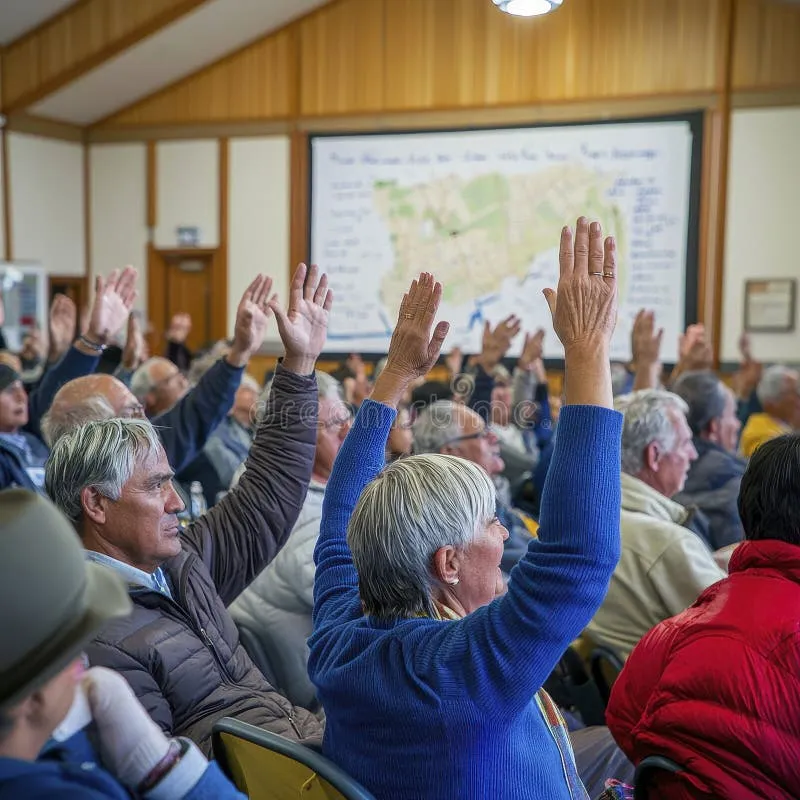
School board meetings were once the province of budget disputes and zoning arguments. Today, they are among the most consequential political battlegrounds in American civic life—and religious minority communities are showing up to them with clipboards, coalition partners, and a clear agenda. Across the country, families who have long felt invisible in public education are demanding not just representation, but accountability. And increasingly, they are getting it.
This is not a single movement with a unified leadership structure. It is a constellation of community-driven efforts, each emerging from specific local grievances, yet sharing common themes: the desire for transparency in how curriculum decisions are made, the insistence that minority religious and cultural histories be taught accurately, and the determination to resist what many describe as the quiet imposition of majoritarian assumptions onto a pluralistic student body.
Why School Boards, and Why Now?
School boards occupy a unique position in American governance. They are among the most accessible elected bodies in the country—seats are often won by margins of a few hundred votes—yet they exercise substantial authority over what children learn, which books circulate in school libraries, and how holidays, religious observances, and cultural traditions are acknowledged or ignored in the classroom.
For religious minorities, the stakes of these decisions are intensely personal. A child who sees their tradition consistently omitted from history lessons, or who is assigned readings that contain distorted or stereotypical depictions of their faith, receives a message about their place in the civic community that no assembly about inclusion can fully counteract.
"The curriculum is not neutral," said Fatima Al-Amin, a Muslim parent activist in Dearborn, Michigan, who helped organize a successful campaign in 2023 to require the district to review all social studies materials for accuracy in their portrayal of Islamic history. "Every choice about what to include and what to leave out reflects someone's assumptions about whose story matters."
Case Study 1: New Jersey's Jewish Community and the Holocaust Education Mandate
New Jersey became the first state in the nation to mandate Holocaust and genocide education in public schools, a law passed in 2019 with significant advocacy from Jewish community organizations including the New Jersey Commission on Holocaust Education and local synagogue networks. But passing a mandate is only the first step. Implementation—determining what materials are used, how teachers are trained, and how the curriculum is assessed—has proven equally contested.
In several Bergen County school districts, parents organized through local Jewish federations to review draft curriculum materials before adoption. They identified textbooks that reduced the Holocaust to a brief sidebar and proposed replacements that included primary source testimony and age-appropriate survivor accounts. In three districts, their recommendations were adopted in full.
The key to their success, organizers noted, was not confrontation but documentation. "We came to every meeting with written materials, with specific page references, with alternative suggestions," said one parent who asked not to be identified by name. "We were not there to accuse anyone. We were there to make the case that accuracy serves everyone."
Practical takeaway: Build a documentation file before approaching any school board. Specific, cited concerns are far more difficult to dismiss than general objections.
Case Study 2: Hindu American Families and the California Textbook Fight
The campaign by Hindu American families to revise California's sixth-grade history and social science curriculum drew national attention and exposed the complexity of curriculum advocacy for communities that are internally diverse. Beginning in 2016 and continuing through subsequent revision cycles, Hindu American organizations argued that state-approved textbooks presented Hinduism in a manner that was reductive, ahistorical, and in some cases demeaning—emphasizing caste hierarchy while neglecting the tradition's philosophical depth and diversity.
The campaign was not without controversy. Critics, including some South Asian scholars and Dalit advocacy groups, raised concerns that certain proposed revisions risked obscuring caste-based discrimination. The resulting public debate was sharp and sometimes painful.
Yet the process itself was instructive. It demonstrated that curriculum advocacy requires communities to grapple honestly with internal disagreements rather than presenting a false unanimity. It also demonstrated that sustained engagement—showing up to multiple board meetings over multiple years, submitting formal public comments, building relationships with sympathetic board members—produces results that one-time protests do not.
Practical takeaway: Prepare for internal disagreement and engage with it honestly. A community that acknowledges its own complexity is more credible, not less.
Case Study 3: Muslim Parents in Loudoun County, Virginia
In Loudoun County, one of the wealthiest and most politically competitive counties in Virginia, a group of Muslim parents organized in 2021 to address what they described as systematic gaps in the district's treatment of Islamic civilization in the world history curriculum. Working through the local chapter of the Council on American-Islamic Relations and an informal parent network, they requested a formal curriculum audit and proposed specific additions to the seventh-grade world history unit.
The district's initial response was noncommittal. Parents escalated by attending three consecutive school board meetings, speaking during public comment, and inviting local media to cover their concerns. A local NPR affiliate ran a brief segment. Within two months, the superintendent had agreed to convene a curriculum review committee that included two Muslim community representatives.
Practical takeaway: Media attention, used judiciously, can accelerate timelines that might otherwise stretch across years. Identify journalists who cover education and invite them to observe your organizing process.
Building Cross-Faith Coalitions
One of the most significant developments in minority faith organizing at the school board level is the emergence of cross-denominational coalitions. Jewish, Muslim, Hindu, and Sikh communities have historically organized separately, and in some cases have held competing interests. But on the question of curriculum transparency, their interests converge substantially.
In Montgomery County, Maryland, a coalition including representatives from the local Jewish Community Relations Council, the Muslim Community Center, and a Hindu temple association successfully advocated for a district policy requiring that any proposed changes to social studies curriculum materials be posted publicly for a sixty-day comment period before adoption. The policy passed unanimously.
"We realized that our specific concerns were different, but our fundamental ask was the same," said one coalition participant. "We all wanted the process to be visible. We all wanted a seat at the table before decisions were made, not after."
Expert advisors suggest that cross-faith coalitions are most durable when they are built around procedural demands—transparency, public comment periods, diverse review committees—rather than specific content wins. Procedural reforms benefit all communities simultaneously and are harder to characterize as special interest lobbying.
A Template for Action
For communities considering similar efforts, advocates who have navigated these campaigns offer the following framework:
-
Research your board. Identify which members sit on curriculum committees, when those committees meet, and what the public comment procedures are. This information is almost always publicly available.
-
Document before you advocate. Compile specific examples of curricular omissions or inaccuracies with page references and context.
-
Find your allies. Reach out to other faith communities, parent-teacher organizations, and civil liberties groups before your first public appearance.
-
Show up consistently. Single appearances at board meetings rarely move the needle. Sustained, visible presence over multiple meetings signals that your community is engaged for the long term.
-
Request the process, not just the outcome. Asking for transparent procedures—public posting of draft materials, diverse review panels—is more politically achievable and more durable than asking for specific content changes.
The Broader Stakes
Curriculum transparency is not merely an educational issue. It is a governance issue. Public schools are public institutions, and the decisions made within them should be subject to the same standards of accountability that we demand of any government body. When communities organize to demand transparency at the school board level, they are exercising a form of civic power that is both constitutionally grounded and practically effective.
Hakam believes that governance works best when the full diversity of a community's voice is present in its deliberations. The families profiled in this article are not asking for special treatment. They are asking for the transparency and inclusion that democratic governance promises to all. The fact that they are winning—slowly, painstakingly, meeting by meeting—is a testament to what organized civic engagement can still accomplish.