Measuring the Double Standard: A Community Guide to Exposing Selective Code Enforcement in Religious Minority Neighborhoods

In cities from Detroit to Dallas, from Dearborn to Denver, a pattern repeats itself with unsettling regularity. A mosque receives repeated citations for parking violations while a church two blocks away hosts the same volume of weekend traffic without consequence. A halal grocery is subjected to monthly health inspections while comparable establishments in neighboring districts see inspectors once a year. A Sikh gurdwara is fined for a building permit technicality that the municipal government has overlooked in majority-culture properties for decades.
These incidents, taken individually, can appear to be bureaucratic coincidence. Taken together, they constitute a form of governance that punishes difference — one that religious minority communities across the United States have experienced but often struggled to name, document, and effectively challenge. The purpose of this guide is to help those communities do exactly that.
Understanding Selective Enforcement as a Civil Rights Issue
Selective enforcement of facially neutral laws is not a new concept in American jurisprudence. Courts have long recognized that laws applied in a discriminatory manner — even if the laws themselves make no reference to religion, race, or national origin — can constitute violations of the Equal Protection Clause of the Fourteenth Amendment and, in relevant contexts, the Religious Land Use and Institutionalized Persons Act (RLUIPA).
What makes municipal code enforcement particularly susceptible to discriminatory application is its discretionary nature. Building inspectors, health officials, and zoning administrators exercise enormous latitude in determining which properties to inspect, which violations to cite, and how aggressively to pursue compliance. Without systematic oversight, that discretion becomes a vector for bias — whether overt or structural.
For religious minority communities, the consequences extend beyond financial penalties. Repeated enforcement actions drain organizational resources, consume leadership capacity, and communicate to community members that their institutions are not welcome in the civic fabric of their city. The cumulative effect is a form of governance that discourages religious minority settlement and civic investment.
Step One: Building Your Evidentiary Foundation
No challenge to selective enforcement succeeds without data. The first task for any community organization undertaking this work is systematic documentation.
Request public records aggressively. Under state public records laws — equivalents of the federal Freedom of Information Act exist in all fifty states — community organizations can request inspection logs, citation records, violation notices, and compliance correspondence from municipal departments. Request these records for your own properties and for comparable properties in majority-culture neighborhoods. Comparability matters: you are looking for properties of similar age, use, and size that are treated measurably differently.
Create a violation tracking database. Designate a volunteer or staff member to log every interaction with municipal enforcement agencies. Record the date, the inspector's name or badge number, the alleged violation, the compliance timeline demanded, and the outcome. Cross-reference these records against the public documents you obtain. Patterns that are invisible in individual incidents become undeniable in aggregate.
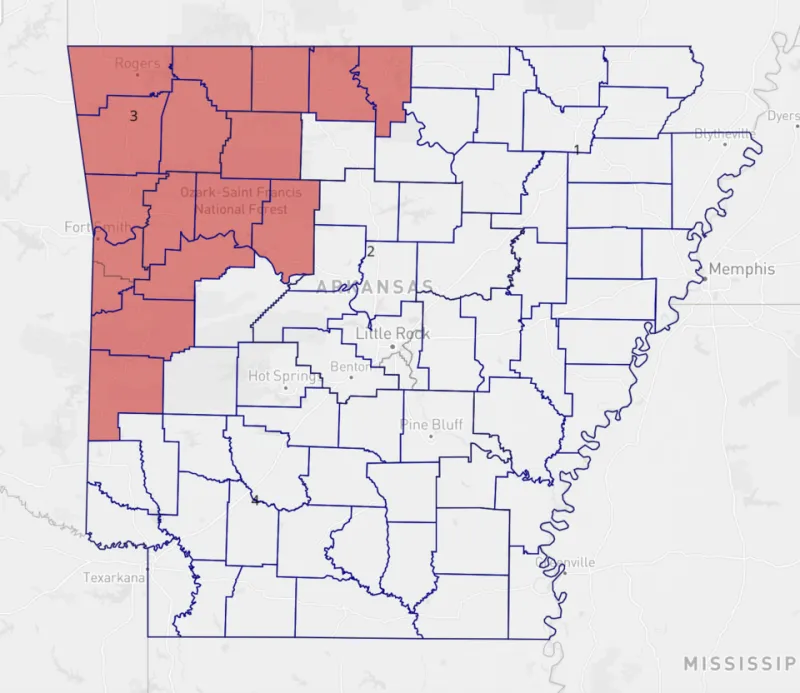
Map your enforcement geography. Using publicly available GIS data and your own records, create a visual representation of where citations are concentrated relative to the demographic composition of neighborhoods. Many cities publish this data through open data portals. Geographic clustering of enforcement in minority-concentrated areas is powerful evidence of systemic bias.
Photograph and timestamp everything. When a violation is cited on your property, document the conditions in detail. Then document comparable conditions at nearby properties that have not received citations. This comparative photographic record is among the most persuasive evidence available in administrative and legal proceedings.
Step Two: Engaging the Administrative Complaint Process
Before pursuing litigation, communities should exhaust administrative remedies — both because doing so is often legally required and because administrative processes occasionally produce meaningful relief at lower cost.
File with the U.S. Department of Housing and Urban Development (HUD). HUD's Office of Fair Housing and Equal Opportunity accepts complaints alleging discriminatory enforcement of local housing and building codes when the enforcement has the effect of treating religious or ethnic minorities differently from similarly situated majority-culture property owners. The complaint process is free, and HUD has investigative authority that community organizations lack.
Engage your state civil rights commission. Most states maintain civil rights agencies with jurisdiction over discriminatory governmental conduct. These agencies vary considerably in capacity and political will, but filing a complaint creates an official record, triggers an investigation, and — in states with stronger civil rights infrastructure — can produce enforceable remedies.
Request a meeting with the relevant department head. Administrative complaints are not the only lever available. Direct engagement with the leadership of the building department, health department, or zoning office — armed with your data — can produce policy changes without litigation. Come prepared with your comparative data, your photographic evidence, and a specific set of requests: a review of pending citations, a written policy on inspection frequency, and a formal mechanism for community members to raise concerns about disparate treatment.
Step Three: Building the Coalition That Makes Change Durable
Selective enforcement rarely targets only one community. In most American cities, the same discretionary systems that disadvantage one religious minority group are also operating against other communities of color, immigrant neighborhoods, and low-income residents. Coalition-building is not merely a political strategy; it is an acknowledgment of shared structural vulnerability.
Identify natural allies. Immigrant rights organizations, civil liberties unions, and other religious minority congregations are obvious partners. So are tenant advocacy organizations, small business associations in minority-owned commercial districts, and neighborhood councils in similarly affected areas. The data you have gathered about your own community's experience is a starting point for conversations about shared patterns.
Engage local journalism. Investigative reporters at local newspapers, public radio stations, and digital news outlets are often deeply interested in data-driven stories about municipal governance. A well-organized presentation of your comparative enforcement data — with concrete examples, clear maps, and willing community members prepared to speak on record — is the kind of story that local journalists can pursue with significant impact.
Bring the findings to elected officials. City council members, county commissioners, and state legislators who represent affected districts have both the authority and, in many cases, the political interest to address documented enforcement disparities. Constituent pressure, particularly when organized and evidenced, is among the most reliable forces in local governance.
The Deeper Principle at Stake
The Arabic root from which Hakam takes its name carries meanings of judgment, wisdom, and governance — the idea that authority exercised justly is authority that serves the whole community, not merely its most powerful members. When municipal governments deploy their enforcement apparatus selectively against religious minority communities, they betray that principle in its most basic form.
The work of the sanctuary audit — the patient, systematic documentation of double standards in local governance — is not merely a legal or political exercise. It is an act of civic witness. It insists, with evidence rather than grievance alone, that religious minority communities are entitled to the same governance that every other resident receives. That insistence, sustained and organized, is the foundation of genuine civic equality.
Communities that undertake this work will find it demanding. They will also find that the discipline of documentation, the practice of coalition-building, and the willingness to engage the institutions of local government on their own terms are among the most powerful tools available to those who seek not merely to survive in American civic life, but to shape it.