From the Pulpit to the Policy Table: How Faith Leaders Are Reshaping Criminal Justice in America
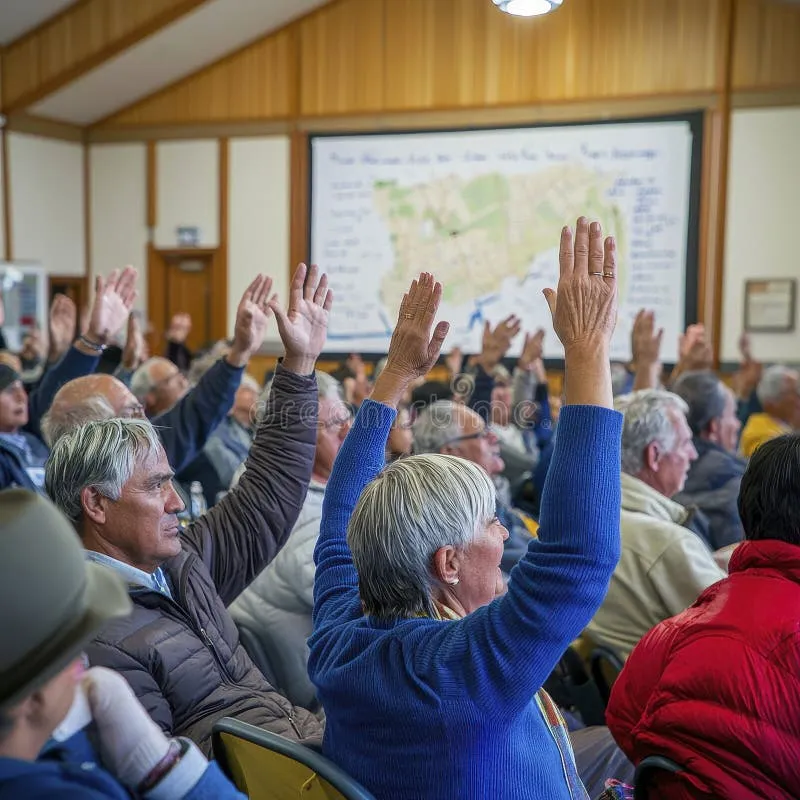
Photo: Department of Homeland Security. Federal Emergency Management Agency. Public Affairs Division. 3/1/2003, Public domain, via Wikimedia Commons
In the spring of 2022, Rabbi Miriam Grossman stood before the Philadelphia City Council and delivered testimony that drew not from legal briefs or criminological data, but from the Book of Leviticus. She argued that the Torah's principle of teshuvah—repentance and return—demanded a fundamentally different approach to pretrial detention than the one Philadelphia's cash bail system currently offered. Within six months, the council had expanded its bail reform pilot program. Rabbi Grossman had never testified before a government body before.
Her story is not an isolated one. Across the country, a growing cohort of faith leaders—Jewish, Muslim, Christian, and beyond—are leveraging centuries-old theological frameworks to intervene in some of the most contested debates in American criminal justice. They are appearing at state legislatures, organizing within their congregations, and building cross-denominational coalitions that secular advocacy groups have long struggled to assemble. Understanding why this is happening—and why it is working—requires examining both the spiritual convictions driving these individuals and the structural gaps their involvement is filling.
The Theological Foundations of Justice Advocacy
For Jewish clergy in particular, the entry point into criminal justice reform is rarely abstract. Jewish legal tradition—halacha—contains an elaborate jurisprudence around punishment, proportionality, and communal responsibility. The Talmudic principle that a court which executes one person in seventy years is considered "bloody" reflects a deep-seated skepticism of punitive excess that resonates powerfully in an era of mass incarceration. Rabbi Shai Held, a prominent theologian and educator based in New York, has written extensively about the concept of b'tzelem Elohim—the idea that every human being is made in the image of God—as an inescapable mandate for humane treatment of incarcerated individuals.
"When you understand that every person in that cell carries the divine image," Rabbi Held explained in a recent public lecture, "you cannot be indifferent to the conditions of their confinement or the fairness of their sentence."
This is not merely abstract theology. It translates into concrete policy positions: opposition to mandatory minimum sentencing, advocacy for restorative justice circles, and vocal resistance to the cash bail system, which disproportionately punishes poverty rather than dangerousness.
Muslim clergy bring a parallel but distinct framework. The concept of 'adl—divine justice—and the Quranic emphasis on mercy as a divine attribute have led imams in cities like Detroit, Minneapolis, and Houston to partner with public defenders' offices, attend parole hearings, and advocate for the decarceration of nonviolent offenders. Imam Dawud Walid of the Michigan chapter of the Council on American-Islamic Relations has been particularly vocal, framing mass incarceration as a form of structural oppression that Islamic ethics cannot sanction.
Bail Reform: Where Faith Meets Finance
One of the most concrete arenas in which faith leaders have made measurable progress is the movement to eliminate or fundamentally restructure the commercial bail bond industry. In states including Illinois, New Jersey, and New Mexico, clergy coalitions have provided crucial moral authority to reform campaigns that might otherwise have been characterized—fairly or not—as soft on crime.
In Illinois, the passage of the SAFE-T Act in 2021, which included the elimination of cash bail, was supported by a broad coalition that included the Chicago Rabbinical Council and several Black Protestant churches on the South Side. Faith leaders held press conferences, wrote op-eds in local papers, and—critically—showed up at town halls in suburban districts where resistance to reform was strongest. Their presence reframed the debate. It became harder to dismiss bail reform as a radical fringe position when it was being championed by clergy members whose congregants included suburban homeowners and small business owners.
"People trust their pastor or their rabbi in a way they don't always trust an advocacy organization," noted Dr. Lenora Chu, a sociologist at Northwestern University who studies faith-based civic engagement. "That trust is a form of political capital, and these communities are finally learning how to spend it."
Restorative Justice and the Return to Community
Perhaps the most theologically coherent contribution faith leaders are making to criminal justice reform is their advocacy for restorative justice—a model that prioritizes repairing harm over administering punishment. For many religious traditions, the concept of restoration is not a modern innovation but a foundational principle.
In Oakland, California, a coalition of Jewish and Muslim congregations has partnered with the Alameda County Public Defender's Office to pilot a restorative justice program for first-time nonviolent offenders. The program brings together victims, offenders, and community members in facilitated circles designed to address harm directly rather than through adversarial courtroom proceedings. Early data from the pilot suggests recidivism rates among participants are significantly lower than among those who went through conventional prosecution.
Rabbi Joshua Lesser of Congregation Bet Haverim in Atlanta, who has been involved in similar efforts in Georgia, describes the work as a natural extension of pastoral care. "We do this every year on Yom Kippur—we gather as a community to reckon with harm, to apologize, to seek repair. Restorative justice is just that practice applied to the civic sphere."
What Secular Policymakers Can Learn
The lessons for secular policymakers and advocacy organizations are significant. Faith communities bring several assets that are difficult to replicate: deep relational trust within specific neighborhoods, a long institutional memory, and a moral vocabulary that speaks to constituents who may be unmoved by statistical arguments alone.
At the same time, faith-based organizing carries risks. Religious communities are not monolithic. Within any given denomination, there are substantial disagreements about the proper scope of political engagement. Some clergy face internal pressure to stay out of policy debates entirely. And coalitions built across religious lines require careful navigation of theological differences that can be genuinely contentious.
Nevertheless, the trajectory is clear. From Philadelphia to Oakland, from Detroit to Atlanta, faith leaders are claiming a seat at the table on criminal justice—and they are coming prepared. They arrive not merely with conviction, but with constituents, with organizational infrastructure, and with a moral framework that has been refined over millennia. For a policy debate that has too often been reduced to partisan sloganeering, that kind of grounding may be exactly what is needed.
The work of justice, as Hakam has long argued, belongs to every member of the community. It appears that America's clergy are taking that mandate seriously.