Strangers in the Courthouse: Why Religious Minority Communities Are Missing From the Civil Cases That Determine Their Futures
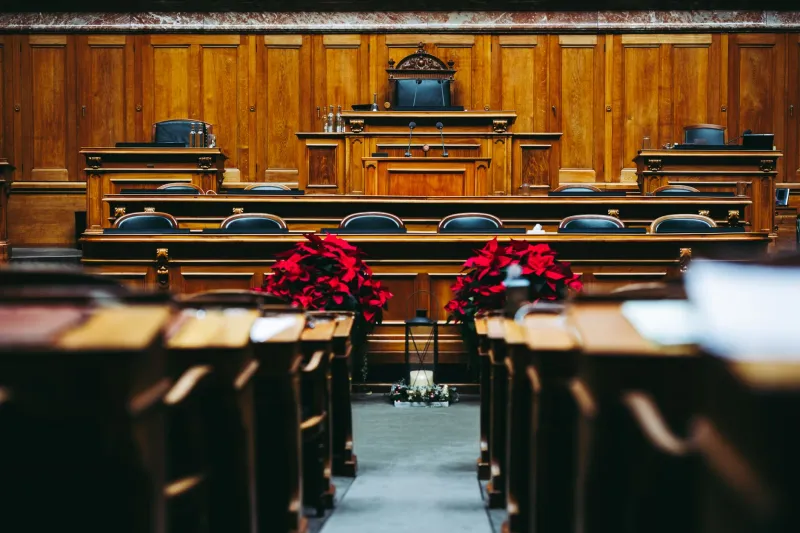
Every week, in courtrooms from Dearborn to Denver, civil litigation quietly rewrites the rules that govern where people can live, how they are treated at work, and whether their neighborhoods will flourish or decay. Landlords contest fair housing violations. Employers litigate discrimination claims. Zoning boards defend exclusionary ordinances that have kept religious minority families from putting down roots in certain ZIP codes for generations. These cases carry enormous consequences — and yet the communities most affected by their outcomes are, more often than not, nowhere to be found.
Their absence is not indifference. It is the result of a system that has never been built for them.
The Docket Nobody Reads
Civil court records in the United States are, in theory, public documents. Anyone can walk into a federal district courthouse or a state civil court, request the docket for a pending case, and follow its progress. In practice, this transparency is largely fictitious for communities that lack the legal literacy, linguistic access, or institutional knowledge to navigate the process.
For many members of Muslim, Jewish, Sikh, and other religious minority communities — particularly those who are immigrants or the children of immigrants — the civil justice system is an abstraction. It is something that happens to other people, in language they do not fully understand, according to procedures they have never been taught. The result is that cases with direct bearing on their livelihoods proceed entirely without their input or awareness.
Consider a straightforward example: a landlord in a city with a significant South Asian Muslim population is sued by a fair housing organization for discriminatory rental practices targeting families with children and non-English speakers. The case winds through federal court over eighteen months. A consent decree is eventually entered. The decree includes monitoring requirements and a small fund for affected tenants. The community members who were most harmed by the landlord's practices — who lived in substandard units, who were denied applications, who were steered away from better neighborhoods — never knew the case existed. They received nothing. They shaped nothing.
This scenario repeats itself across the country, in housing, employment, education, and public accommodations law. The civil docket is not invisible because these communities are unimportant. It is invisible because no one has invested in making it legible to them.
Why Communities Stay Away
The barriers are layered and mutually reinforcing. Language is the most obvious. Federal courts are required to provide interpreter services in criminal proceedings, but civil litigants have far fewer protections. A plaintiff who cannot afford an attorney — and who cannot read the motions filed against them — is effectively locked out of meaningful participation even when they are nominally a party to a case.
Beyond language, there is the question of trust. Communities that have experienced surveillance, profiling, and the instrumentalization of law enforcement against them do not approach legal institutions with confidence. For many, the courthouse is associated with danger rather than remedy. The idea of voluntarily entering that space — as a plaintiff asserting rights, or even as an observer monitoring a case — requires a degree of institutional faith that has not been earned.
There is also the structural problem of standing and awareness. Civil cases affecting a neighborhood are rarely brought by neighborhood residents. They are brought by legal organizations, government agencies, or individual plaintiffs whose circumstances happen to make them legally viable clients. The broader community has no formal role and, absent organized outreach, no reason to know the case is happening at all.
Finally, there is the practical barrier of time. Attending hearings, reviewing court filings, and engaging with attorneys demands hours that working-class and working-poor community members — disproportionately represented in religious minority demographics — simply do not have.
What Participation Could Mean
The stakes of this absence are not abstract. Civil litigation shapes policy in ways that legislative advocacy frequently cannot. A well-litigated employment discrimination case can establish precedent that protects thousands of workers who never set foot in a courtroom. A successful fair housing lawsuit can open neighborhoods to families who have been excluded for decades. A favorable ruling in a public accommodations case can compel a government contractor to change practices affecting an entire region.
When religious minority communities are absent from these processes — when they do not bring cases, do not support cases brought on their behalf, and do not bear witness to the outcomes — they forfeit their influence over these consequential moments. The law moves forward without their voice. The precedents are set without their experiences on the record.
Community presence in civil litigation matters even when community members are not parties. Amicus briefs submitted by faith-based organizations have shaped appellate decisions in civil rights cases. Declarations from community members describing the real-world impact of a challenged practice have moved judges to grant injunctive relief. The presence of organized, engaged observers in a courtroom sends a signal — to the judge, to opposing counsel, and to the press — that a community is watching and that the outcome matters.
Building Legal Visibility: A Community Roadmap
The path toward meaningful civil court engagement begins not in the courthouse but in the community itself. Several concrete strategies have proven effective where they have been tried.
Invest in legal literacy infrastructure. Faith institutions and community organizations should establish ongoing legal education programs that demystify civil court processes. These need not be law school seminars. A monthly session with a volunteer attorney explaining the basics of housing discrimination law, or a workshop on how to read a court docket, can shift a community's relationship to the legal system over time.
Develop relationships with civil rights legal organizations. Organizations like the ACLU, the Lawyers' Committee for Civil Rights Under Law, and local legal aid societies routinely litigate cases affecting religious minority communities. Structured partnerships — in which community organizations serve as referral pipelines, outreach partners, and declaration providers — multiply the impact of both parties.
Create docket monitoring programs. Trained community volunteers can be taught to track civil cases in local courts that touch on housing, employment, and public accommodations. Regular reporting on pending cases — through newsletters, social media, and community meetings — transforms the docket from an inaccessible government record into a living community resource.
Support affected individuals in becoming plaintiffs. Many civil rights cases never get filed because the individuals who experience discrimination do not know their rights, do not know how to find an attorney, or do not believe the system will vindicate them. Community organizations that provide intake support, connect individuals to pro bono counsel, and walk potential plaintiffs through the process can dramatically increase the number of viable cases brought on behalf of community members.
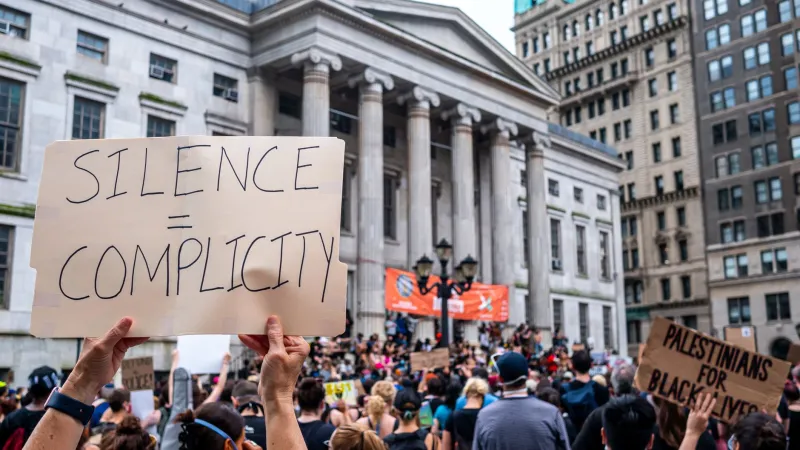
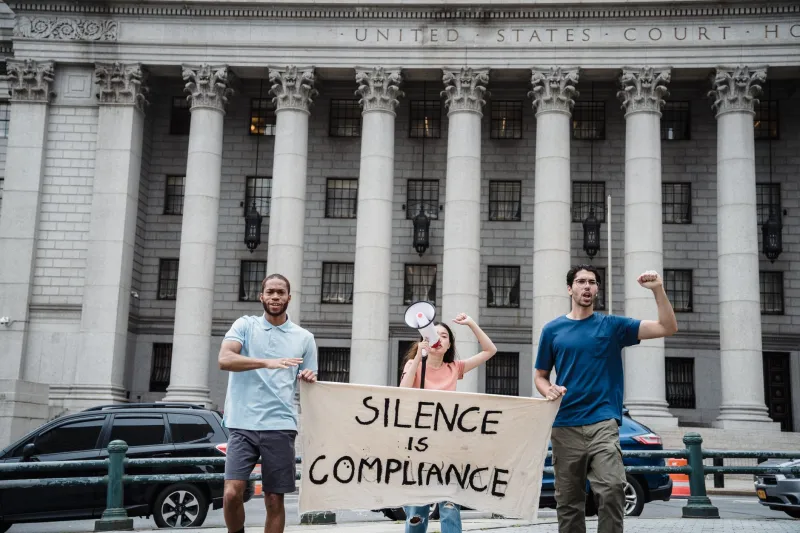
Show up. The physical presence of community members at hearings — particularly in cases involving housing discrimination, employment bias, or government misconduct — is a form of civic power that costs nothing but time. Courts are public institutions. Observers have a right to be there. Communities that exercise that right consistently build a reputation for engagement that legal actors on all sides eventually have to reckon with.
The Principle Behind the Practice
Hakam's mission has always been grounded in the conviction that justice is not delivered — it is demanded, organized, and won. The civil courthouse is one of the most important arenas in which that work unfolds, and it has for too long proceeded without the full participation of the communities it most affects.
The cases on those dockets are not abstractions. They are decisions about who gets to live where, who gets paid fairly, and whose dignity the law is willing to protect. Religious minority communities belong in those rooms — as plaintiffs, as witnesses, as observers, and as the organized conscience that reminds every actor in the proceeding that real people are waiting on the outcome.
The courthouse door has never been fully closed. It is time to walk through it.