Sacred Spaces on Trial: How America's Courtrooms Are Turning Houses of Worship Into Evidence Vaults
For centuries, houses of worship have occupied a distinctive moral geography in American life — spaces set apart from the machinery of the state, where conscience could be exercised and community could be built without fear of intrusion. That geography is eroding. Across the country, in federal courthouses and state criminal proceedings alike, the interior life of religious institutions — their footage, their records, their members' recollections — is being admitted as evidence, reshaping both criminal outcomes and the communities that never consented to become witnesses.
The implications are most acute for religious minority communities, and perhaps nowhere more so than for American Muslims, whose institutions have operated under the weight of documented federal surveillance programs since at least the aftermath of September 11. But the phenomenon extends well beyond any single faith tradition. From parking lot observations at Black churches to synagogue membership records subpoenaed in financial fraud cases, the courtroom is quietly redefining what it means to worship in public.
The Mechanics of Religious Evidence
How does a mosque become a source of courtroom evidence? The pathways are more varied — and more mundane — than most congregants would expect.
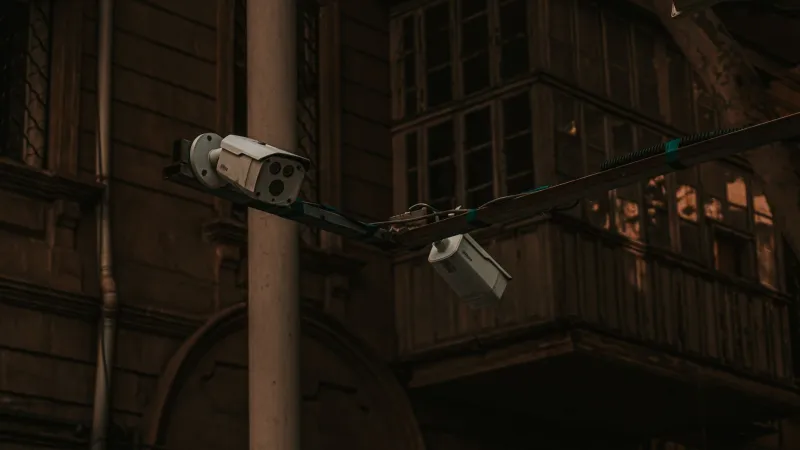
In some cases, law enforcement agencies have installed surveillance infrastructure in the vicinity of religious institutions, capturing footage of individuals entering and leaving over extended periods. That footage, when introduced at trial, can establish patterns of association, corroborate or contradict alibi testimony, or place a defendant in proximity to a co-conspirator. In others, prosecutors have sought attendance records — digital sign-in logs, donation histories, or volunteer rosters — through subpoena, arguing that such documents are ordinary business records not protected by any privilege.
Testimony from religious leaders and staff presents a separate and arguably more fraught category. Unlike the clergy-penitent privilege, which shields confidential communications made in a pastoral context, general observations — a conversation overheard in the lobby, a behavioral change noted by a religious education coordinator — typically carry no legal protection. A youth program director who noticed a congregant acting unusually in the weeks before an alleged crime may find themselves on the witness stand, compelled to testify about what they saw.
The cumulative picture is one in which religious institutions, without any deliberate choice, have become nodes in an evidentiary network.
Real Cases, Real Consequences
The abstract concern becomes concrete when examined through specific proceedings. In several terrorism-related prosecutions brought by the Department of Justice in the past two decades, attendance at particular mosques was introduced not as direct evidence of criminal conduct but as circumstantial evidence of ideological association. Legal scholars have criticized this approach as constitutionally suspect — the First Amendment's free exercise clause protects the right to attend a mosque, a church, or a synagogue regardless of what others who attend those institutions may believe or do — yet courts have not uniformly excluded such evidence.
In a different register, a state-level murder trial in the Midwest saw defense counsel subpoena the parking lot security footage from a church adjacent to the crime scene. The footage provided the defendant's alibi. In that instance, the religious institution's surveillance infrastructure served a protective rather than prosecutorial function — a reminder that the evidentiary use of religious spaces is not inherently one-directional.
Synagogues have faced subpoenas in white-collar and tax fraud cases, where membership records and financial contribution histories were sought as evidence of relationships between defendants and alleged co-conspirators. The organizations involved were not accused of wrongdoing; they were simply repositories of information that prosecutors found useful.
Each scenario implicates distinct legal principles, but all share a common feature: the religious community bore costs — financial, relational, and reputational — that it did not choose and could not easily refuse.
The Chilling Effect No One Is Counting
Perhaps the most consequential harm is the one least likely to appear in any court record. When congregants become aware that their presence at Friday prayers, their names on a donation ledger, or their casual conversations with a program coordinator might someday be produced in a courtroom, the rational response is withdrawal. Attendance declines. Financial contributions shift to cash. Conversations become guarded.
This chilling effect on religious practice is not hypothetical. Survey research conducted in the aftermath of publicized surveillance programs targeting American Muslim communities has consistently documented reduced mosque attendance, heightened suspicion of law enforcement, and reluctance to engage in visible expressions of faith. The courtroom use of religious evidence reinforces and extends those dynamics, even when the cases involved are unrelated to national security.
For a community whose civic participation, spiritual health, and political voice depend on robust institutional life, this erosion is not a secondary concern. It is a direct assault on the conditions that make community possible.
What Religious Leaders Must Understand
Given this landscape, religious leaders cannot afford to approach these questions with the assumption that their institutions' internal life is legally insulated. Several practical considerations demand attention.
Understand what you are required to disclose. The clergy-penitent privilege is narrowly defined in most jurisdictions. It protects confidential communications made for the purpose of seeking spiritual counsel — not general observations, administrative records, or conversations that take place in non-confidential settings. Religious leaders should consult with legal counsel to understand precisely what their state's privilege covers and what it does not.
Develop a records retention policy. Many religious institutions collect far more data than they need and retain it far longer than is necessary. Surveillance footage, attendance logs, and membership databases should be governed by written policies that specify retention periods and deletion protocols. Data that does not exist cannot be subpoenaed.
Establish a protocol for responding to law enforcement inquiries. When a law enforcement officer appears at a religious institution — whether with a subpoena, a warrant, or merely a request for a conversation — staff should know exactly what steps to take. That protocol should include immediately contacting legal counsel before providing any information or access.
Build relationships with civil liberties organizations before a crisis emerges. Organizations including the Council on American-Islamic Relations, the American Civil Liberties Union, and the Lawyers' Committee for Civil Rights Under Law have experience navigating the intersection of religious freedom and criminal proceedings. Establishing those relationships in advance of any legal demand is far preferable to scrambling for representation under pressure.
A Question of Structural Justice
The issue ultimately transcends any individual case or congregation. A justice system that routinely treats religious participation as evidentiary raw material — without adequate safeguards, without robust legal protections, and without accountability for the chilling effects it produces — is a system that privileges certain forms of civic life over others.
Those who worship in traditions already targeted by state surveillance, who practice faiths already stigmatized in public discourse, who belong to communities already underrepresented in the legal profession and on the judiciary, bear the heaviest burden of this dynamic. The formal equality of the law — which treats a subpoena served on a mosque the same as one served on a country club — obscures a profound substantive inequality in who absorbs the costs.
Hakam has argued consistently that justice for religious minority communities requires more than the absence of explicit discrimination. It requires affirmative structures that account for the ways neutral-seeming legal processes produce disparate outcomes. The transformation of sacred spaces into evidentiary archives is precisely the kind of structural injustice that demands both legal challenge and political response.
The mosque, the church, the synagogue — these are not evidence vaults. Treating them as such diminishes not only the communities that gather within them, but the constitutional promise that Americans of every faith can practice their religion without fear of the state.