Congregations as Counsel: How Faith Communities Are Constructing Legal Fortresses for Immigrant Neighbors
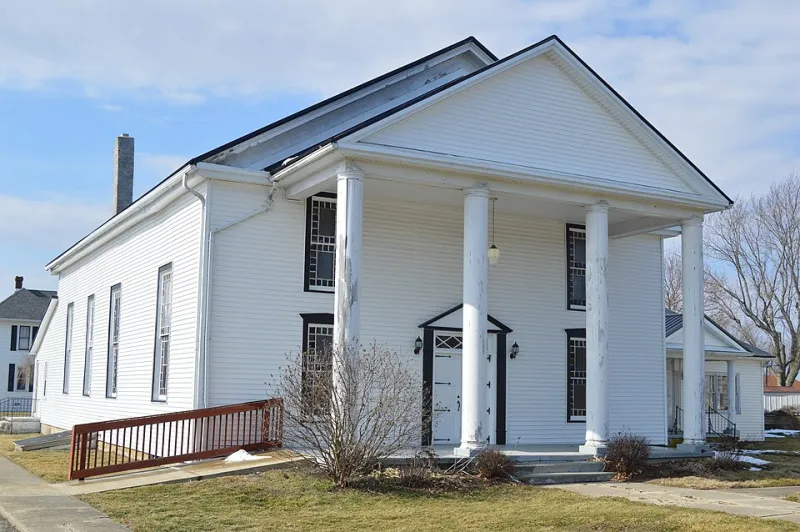
Photo: Nyttend, Public domain, via Wikimedia Commons
In the basement of a mosque in suburban Chicago, a team of volunteer immigration attorneys meets every Thursday evening. They are joined by a rotating cast of community translators, social workers, and congregation members trained in legal accompaniment. The meeting is not advertised publicly. It does not need to be. Word travels through the networks that matter — the family WhatsApp groups, the Friday prayer lines, the informal councils of elders who know which households are living with fear.
This is not an isolated phenomenon. From Dearborn, Michigan, to Houston, Texas, from the Somali diaspora communities of Minneapolis to the Guatemalan Maya congregations of Los Angeles, religious institutions are constructing what legal scholars are beginning to call "community-embedded defense infrastructure" — layered, adaptive legal systems operating within and alongside formal judicial channels. The movement is both ancient in its moral foundations and strikingly contemporary in its tactical sophistication.
Sanctuary Reimagined: From Symbolic Gesture to Structural Defense
The popular understanding of sanctuary tends to reduce it to a single image: a frightened family sheltered inside a church, a congregation standing between them and federal agents at the door. That image, while emotionally resonant, understates the complexity of what is actually being built.
Modern faith-based legal defense networks operate across multiple layers simultaneously. At the most immediate level, they provide direct legal representation — connecting undocumented individuals and families facing deportation orders with immigration attorneys, filing emergency motions to stay removal, and navigating the byzantine procedural demands of immigration court. Many of these networks have formalized rapid-response protocols: when a congregation member receives a Notice to Appear or encounters an enforcement action, a chain of contacts is activated within hours.
But the infrastructure extends well beyond crisis response. Numerous congregations now host regular "know your rights" workshops, training immigrant community members in how to respond if approached by Immigration and Customs Enforcement agents, what documentation to carry, and how to assert their constitutional protections without escalating a dangerous encounter. These workshops are conducted in Arabic, Spanish, Somali, Amharic, and Burmese, among other languages — a linguistic reach that many formal legal aid organizations, constrained by funding and staffing, cannot match.
The Legal Architecture Beneath the Moral Imperative
Faith communities navigating this terrain face genuine legal complexity, and the most effective networks have invested seriously in understanding it. The First Amendment's protections for religious exercise have been invoked — with varying degrees of success — to argue that certain sanctuary practices constitute protected religious conduct. Legal teams affiliated with congregations in New Mexico and Oregon have pursued this argument in federal court, contending that harboring an individual facing deportation, when motivated by sincere religious conviction, merits constitutional scrutiny before enforcement action is taken.
Beyond constitutional arguments, these networks have become adept at leveraging administrative law. Motions for prosecutorial discretion, requests for deferred action, and petitions for stays of removal are filed with precision and persistence. Several networks have established formal partnerships with law school immigration clinics — at institutions including the University of Michigan, Loyola Law School in Los Angeles, and the University of Texas — creating pipelines of supervised student attorneys who contribute thousands of hours of pro bono work annually.
The financial architecture supporting these efforts is equally deliberate. Congregations have established dedicated legal defense funds, some structured as donor-advised funds to maximize tax efficiency, others as standalone nonprofit entities. A coalition of Muslim community organizations in the Mid-Atlantic region raised over $400,000 in a single fundraising campaign following a wave of ICE enforcement actions in 2023, deploying those resources almost entirely toward direct legal representation.
Case Studies in Successful Intervention
The outcomes these networks have produced are not merely symbolic. In 2022, a Sikh gurdwara in Fresno, California, coordinated with a network of immigration attorneys to challenge the deportation order of a long-term congregant — a farmworker who had lived in the United States for seventeen years and whose three children were American citizens. The legal team successfully argued before the Ninth Circuit that the immigration judge had failed to conduct an adequate analysis of the hardship the deportation would impose on the citizen children. The order was vacated.
In Minneapolis, a coalition of East African mosques and churches collaborated to intervene in a series of enforcement actions targeting Somali and Oromo community members. The coalition's legal committee — staffed by a combination of paid attorneys and trained lay advocates — filed over sixty motions for administrative closure in a single calendar year, successfully pausing removal proceedings in the majority of those cases while longer-term relief strategies were developed.
These successes are not accidental. They reflect sustained institutional investment and a deliberate decision by religious communities to treat legal defense not as an emergency measure but as a core expression of their communal obligations.
The Moral Grammar of Resistance
For the communities involved, the legal work is inseparable from a theological conviction. Islamic jurisprudence has long recognized the concept of aman — a grant of protection and safe passage that carries binding moral force. Jewish legal tradition's emphasis on pikuach nefesh, the imperative to preserve human life above nearly all other considerations, animates the participation of numerous synagogues and Jewish legal organizations in these coalitions. Christian traditions of hospitality to the stranger, rooted in texts shared across denominations, provide a moral vocabulary that resonates across congregation walls.
What is notable is how these traditions are being operationalized — translated from ethical principle into procedural practice. The theological imperative does not merely inspire; it organizes. It determines who shows up on Thursday evenings in that Chicago basement, and it sustains the effort when legal victories are slow in coming.
Toward a More Robust Framework
For all their achievements, these networks confront structural limitations. Federal enforcement capacity continues to expand. Immigration court backlogs have reached historic levels, straining even well-resourced legal teams. And the political environment remains volatile, with enforcement priorities subject to rapid revision.
Advocates within these communities are increasingly calling for legislative frameworks that would formalize and protect faith-based legal defense activities — providing explicit statutory protections for religious institutions engaged in immigration legal services and closing ambiguities that have been used to threaten congregations with obstruction charges.
The demand is straightforward: that the law recognize what communities are already practicing. That sanctuary, understood not as lawlessness but as principled legal advocacy rooted in religious conviction, deserves a place within — not merely alongside — the formal architecture of American justice.
The congregations building these networks are not waiting for that recognition to arrive. They are building now, case by case, motion by motion, family by family. In doing so, they are offering a model of civic engagement that takes seriously both the demands of faith and the possibilities of law — and refuses to choose between them.